DISCOVER THE MAGIC OF JAPAN
TANGO no SEKKU – SAMURAI, CARP and IRISES
NEWS FROM MIYABI
TANGO no SEKKU – SAMURAI, CARP and IRISES
Dear friends,
Many of you have surely grown fond of the Japanese Girls’ Festival, Ohinasama, and perhaps you even display a small set of princess and prince dolls at home each year. They symbolize the beauty of life in a pair—the relationship between a girl and her prince. The Boys’ Festival is different, as it is centered rather on virtues. These are represented by samurai dolls and fabric carp, symbolizing the ideal of masculinity—courage and the strength to overcome obstacles. Originally known as Tango no Sekku, the Boys’ Festival has nowadays officially become Children’s Day, celebrating both girls and boys. Yet the same samurai and carp are still displayed, joined by irises, which are also associated with masculine strength. Traditions are not easily renamed. May 5th remains in the minds of people Boys’ Day, just as March 3rd is Girls’ Day. Children’s Day embraces both as I feel it, because relationships and virtues are always intertwined.
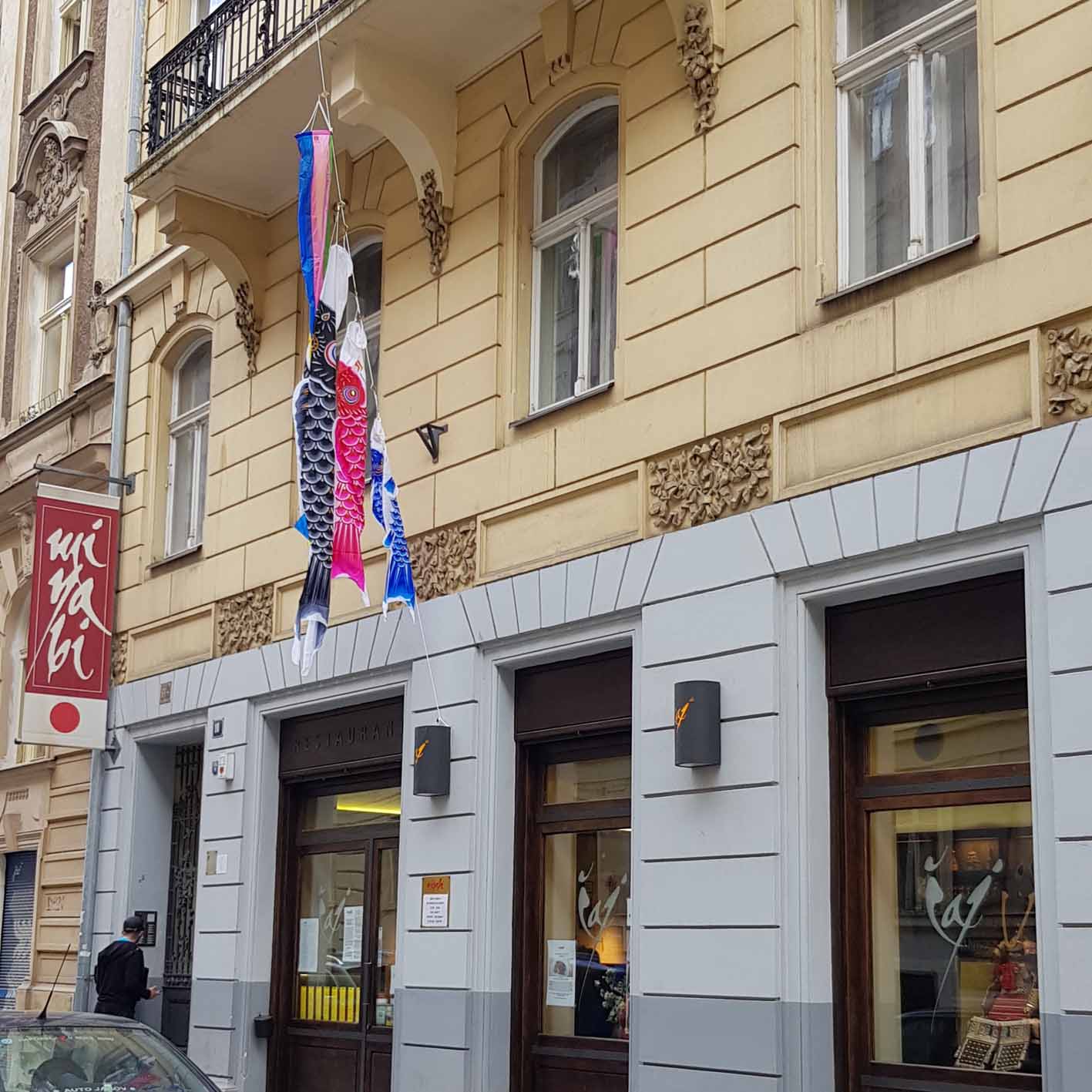
According to the custom of Tango no Sekku, my Japanese husband and I bought a large samurai figure in 1980 for our firstborn son, so that each year, when we take the samurai out of the box, we can remind both ourselves and our boy that we wish to raise him into an honest, skillful, healthy, and strong man. I liked it even more when, following another Japanese tradition, we raised fabric carp koinobori on a tall pole in our house. The large black carp represented the father, the smaller red one the mother—me—and then came the colorful carp children. The first was blue—our son. We longed to have a beautiful family, and we also wanted the world around us to know that we had our son, that we wished to have more children, and that we took joy in our role as parents. I remember once traveling by train through the Toyama region to the city of Toyama, and since it was the end of April, I was struck by the large carp on poles fluttering above the homesteads. I counted how many children each family might have, and I was filled with an encouraging feeling that, in a way, everything was right with humanity. A long time has passed, and Japan has changed, but the desire for a beautiful family is still celebrated. Today, perhaps only with small carp on a shelf—and often with just one child in the household.
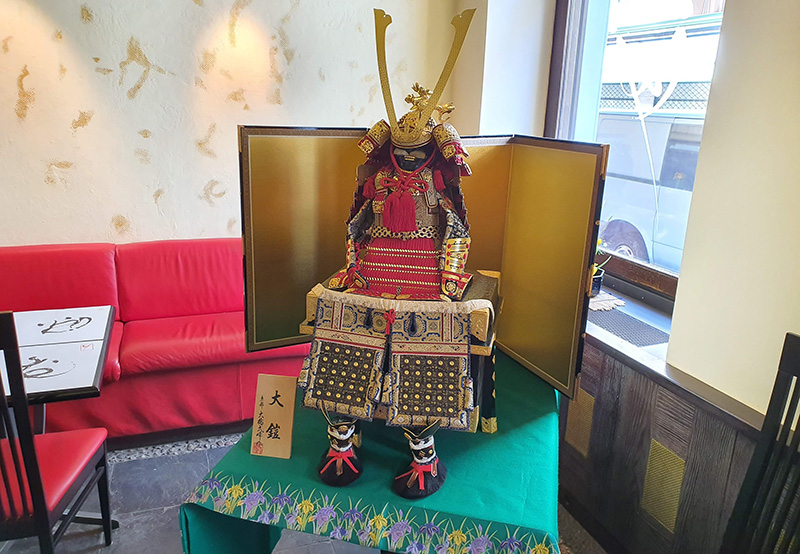
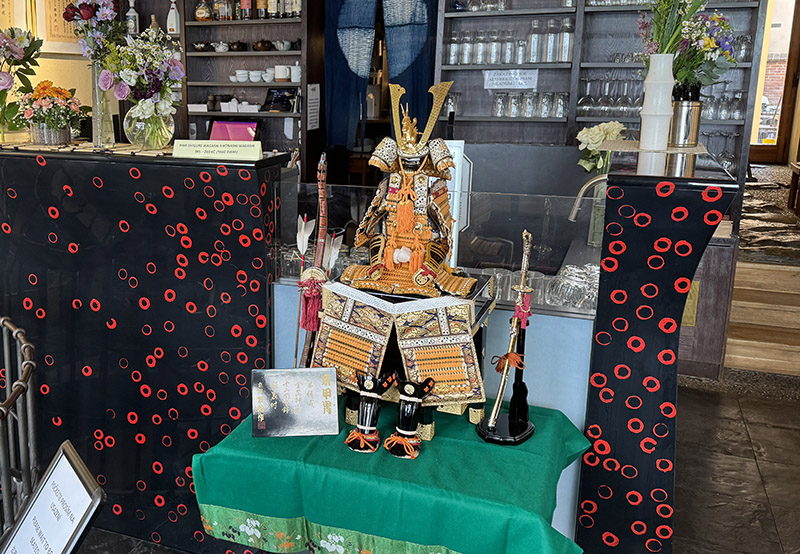
If you are fortunate enough to be in Japan at the turn of April and May, and perhaps staying in a traditional mountain inn, you may come across fabric carp strung on long lines across rivers and small valleys, swelling in the wind and proclaiming the strength of life to the world. It is captivating. It is beautiful! I experienced this in a place called Tsuruodagawa Onsen, in Gunma Prefecture. Fabric carp once also flew above Miyabi, until the city smog turned them black. They were there all year round for several years, because we needed encouragement every day that our efforts had meaning. We no longer have the koinobori carp, but every year we display our Kawasumi samurai, in armor, with a kabuto helmet, sword, and bow. And I always write to our sons—there are three of them—that we love them, and that their samurai is once again sitting in full splendor on its lacquered box. We also display a samurai that we received from the Kurohara family in Japan. They had nowhere to keep it and decided that the best place for the figure would be here with us at Miyabi. We truly appreciate this, and every year we send the Kurohara family a photograph of how their samurai attracts the attention of our guests.
We also display the samurai with the kabuto helmet because May 5th—when Tango no Sekku and Children’s Day are celebrated—is also the day Miyabi celebrates its anniversary. We always decorate the restaurant with irises, as is customary for Tango no Sekku, and also because they are in bloom at this time—blue, purple, and white irises. You may ask why irises are the symbol that celebrates samurai virtues—samurai honor, pride, courage, and determination. As is often the case in Japanese culture, it is due to the fact that two or even three words share the same pronunciation while having different meaning, and through this play on words, the meaning of the symbol is emphasized. In the case of the iris, shōbu in Japanese also sounds like shōbu, meaning a duel or contest, and also competitiveness—and yet another shōbu refers to the spirit of the martial arts. The iris has thus taken on the role of expressing determination, discipline, and other ideals of the samurai. Samurai must not fear hardship or obstacles and must always be determined to prevail. In addition, the leaves of the iris—long and narrow—resemble a sword and its sharpness. The sword is a symbol of protection—protection from danger and evil. Through irises, people therefore wish boys to be protected from all evil, to be successful, capable, and healthy. And because this protection should be made visible in a practical way, during the Boys’ Festival people prepare a hot bath in which iris leaves are steeped. Their fragrance is believed to drive away evil. In this way, irises symbolically intercede for the happy future of boys—and since Boys’ Day has become Children’s Day, for the happy future of all children. Perhaps you have never thought about irises in this way—but why not? To make wishes and to speak through the things around us can become a beautiful game that enriches everyday life.
Children and sweets belong together, and therefore both festivals—March 3rd and May 5th—have their own typical wagashi. For Ohinasama, it is hishimochi, made of green, white, and pink layers, cut into a slightly erotic diamond shape. For Tango no Sekku, it is a mochi ball which, when wrapped in a bamboo leaf, is called chimaki, and when wrapped in an oak leaf, is called kashiwa mochi. Both trees—bamboo and oak—symbolize strength. Both are firm and resilient. At Miyabi, we prepare kashiwa mochi every year, wrapped in Czech oak leaves. They may not smell quite as beautiful, but they are oak—and oak has strong wood that endures.
So, little boys, boys, young men, and men! Girls, women, and all people! Dear guests! Miyabi wishes you to be healthy, strong, and courageous—like warriors and carps. Swim into higher waters and bring protection to all and everywhere you go. Be protected from all evil!
With a thought of the iris,
Yours,
Miyabi Darja