
Discover the Magic of Japanese Cuisine
RENKON cross, Christ and lotos root
Our Restaurant
RENKON cross, Christ and lotos root
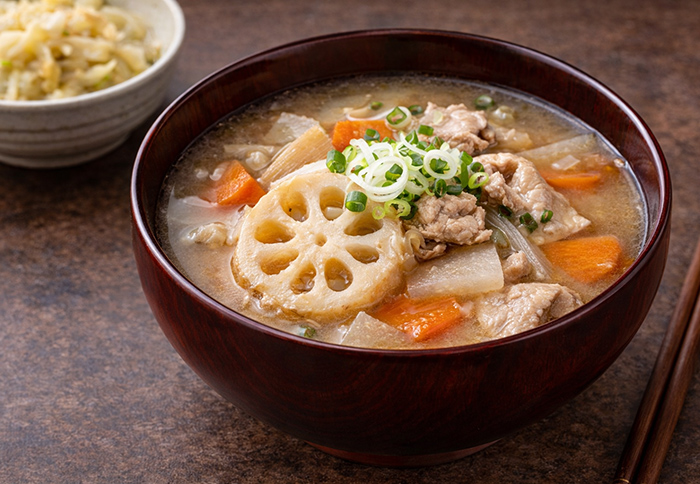
Renkon – lotus root – is a great, tasty and also beautiful vegetable, and yet it is little known in our region. We have to fix this, because renkon has a lot of symbolism and a lot of good things in it. The first thing that comes to mind when I think of renkon is that renkon is related to winter and is eaten mainly in the winter months, when people suffer from colds and are looking for something to cure it. I somehow associate renkon with snow, ski slopes and skiing. In every Japanese mountain hut, the most popular thing for skiers is the hearty butajira soup, where the broth is based on pork and thickened with miso paste. Very good! You can find carrots, leeks and various other vegetables in the soup, but what definitely cannot be missing is renkon, precisely because it is supposed to protect skiers from catching a cold. We associate ginger and ginger tea with winter because it has sharp taste and burns the throat, but renkon is different. It has a subtle taste. The welcome thing about it is that it is low in calories, rich in fiber and has a lot of vitamins and minerals, which all together help with good digestion, improve immunity and maintain a good mood.
In Czech households, people use renkon only a little, but the situation is improving and I am happy about that. You can buy it dried, frozen, wrapped in its own juice or fresh in SAPA. Even delivery company Rohlík offers renkon. Don’t worry that you won’t know what to do with it, just boil the lotus slices and add them to a salad, for example. In fact, it goes well with everything, because it adds a friendly touch to neighboring ingredients and doesn’t clash with them in any way. On the contrary, it adds beauty to them too. The renkon root when cut is beautiful in shape. A small miracle of nature.
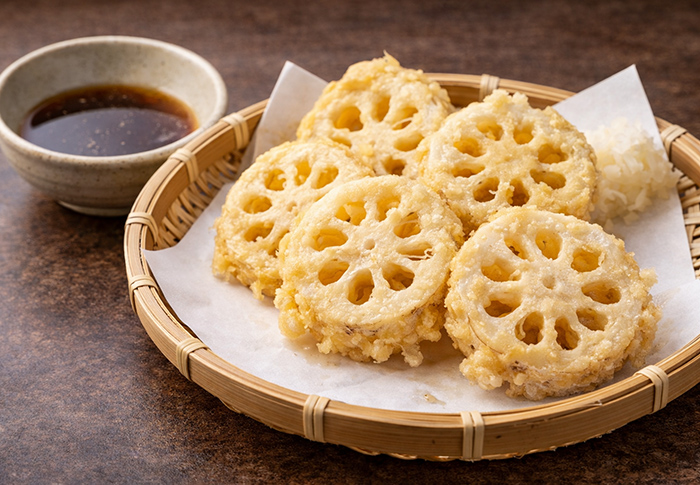
Lotus root forms such white-colored balls, and these balls have holes in them similar to the holes in Emmental cheese. However, the holes in renkon are much more systematic. The image of a cut renkon resembles a beautiful flower. And it is precisely this character of renkon that is often used in Japanese gastronomy. The holes can be stuffed with fish filling, for example, and when the balls are then cut into slices, the bicolor renkon flowers bloom on the plate and brighten the faces of the diners. At Miyabi, we usually just boil the renkon in dashi and color it with beetroot juice. They become pink flowers. Sometimes we color the renkon yellow, make it a little sour, and add yuzu, because yuzu not only tastes good, but also smells nice. Renkon is great as kimpira, i.e. fried in oil and then lightly covered in dashi with soy sauce, stewed and slightly browned. Thanks to its texture and subtle flavor, renkon is also great for tempura. In tempura, the empty holes behind the fog of batter shine through. It’s nice! Renkon is The Raw Material. Discover it for yourself. I learn from the Internet that lotus seeds and flowers are also edible and that in Chinese medicine, dried flowers are used for toothache.
Renkon speaks to us not only with its medical and nutritional qualities, but also inspires with its spiritual qualities. The lotus is primarily associated with Buddhism. Especially its flower. The lotus flower rests on the water surface and has a peaceful effect. White flower. Pink. Purple. Which is more beautiful? It’s silly to ask, because they are all beautiful. For the beauty of the flower, we forget what is below the surface and that the flower grew out of the mud. The lotus is a modest plant. A perennial plant. It turns towards the light. In Buddhism, these qualities are admired and it is no coincidence that Buddha himself always sits on a lotus flower. It is sometimes said that lotus flowers are like people, because people, although connected with sin, are each adapted to love and each has the right and duty to blossom into beauty. This is what Christianity says.
Recently, the lotus from Buddhism became connected to Christianity for me when I had the opportunity to see an antique object that came from Japan from the time when Christianity was cruelly punished. I had the honor of holding in my hand a genuine Japanese fumie in the shape of a Christian cross and on that cross there was not Jesus Christ as we depict him, but a man sitting in a lotus position right in the center of that iron cross. I was surprised. I guess I need to explain what a fumie is. “Fumu” means to step on and “e” is an image or depiction and fumie was used as a tool to convict Christians. This is how the Japanese ruling elite forced people who professed Christianity to deny their faith a few hundred years ago. It was not enough to renounce with words, you had to step on Christ. But why the fumie with the image of a man in lotus posture? I looked for a connection and found it in Jesus’ prayer “Our Father” and meditation associated with the lotus, because both help to want love. Pray love.
The renkon plant, although just a vegetable, can speak to us humans. Its root and flower are much more than a cure for a cold or a toothache. Renkon is a reminder that as humans we have a duty to grow towards the light and spread around love.
Yours, Miyabi Darja